Automating brand compliance: From PDF to real-time checking
Why static brand manuals fail and how AI bridges the gap
8 min read
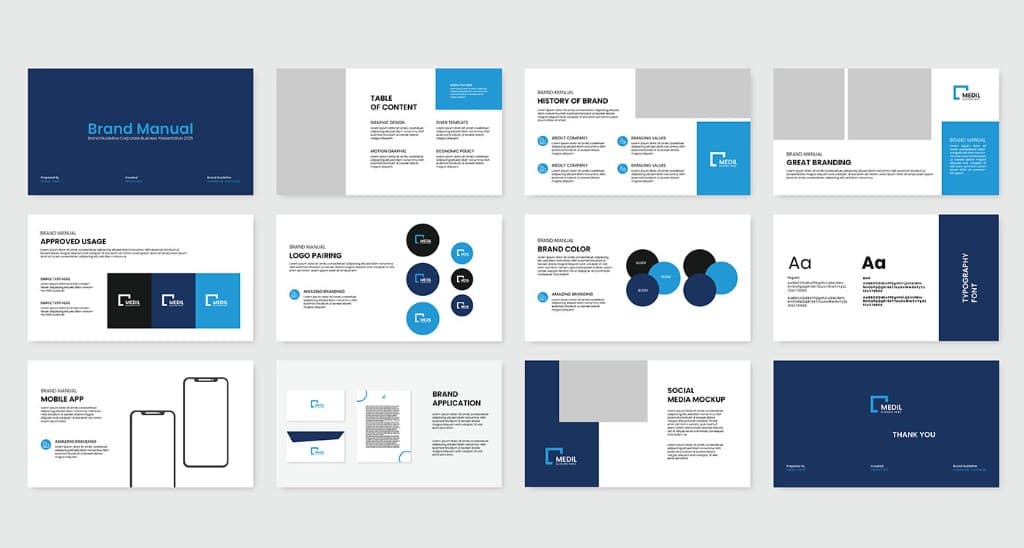
1. The 85/30 Problem
85 percent of all companies have documented brand guidelines. Only 30 percent enforce them consistently. This gap – the “85/30 problem” – has a simple cause: brand rules exist as static PDF documents gathering dust in SharePoint folders. They're too long, too abstract, and too far removed from daily workflows. (The figures come from a widely cited Demand Metric and Lucidpress study from 2016 – the underlying problem has likely not improved since.)
The result: brands regularly produce content that doesn't conform to their own standards. Not out of malice, but because people can't simultaneously consult an 80-page brand manual while writing.
2. Why Manual Control Doesn't Scale
Traditional brand compliance works like this: a document is created, sent to a brand manager, commented on, sent back, revised. This process has three fundamental weaknesses.
Speed: Review cycles take hours to days. In a world where content is produced in minutes, this is a bottleneck.
Scale: A brand manager can't review every email, every presentation, every social media post. With larger teams, blind spots are inevitable.
Consistency: Human reviewers have good and bad days. What passes on Monday gets flagged on Friday. Different reviewers apply different standards.
In practice, brand managers spend a significant part of their work week on manual compliance checks – time that's missing from strategic work.
3. The Paradigm Shift: From “Check Afterwards” to “Check While You Write”
The crucial difference between traditional and AI-powered brand compliance is the timing of the check.
Traditional: Create document → Request review → Receive feedback → Revise → Approval. Lead time: hours to days.
AI-powered: Create document → Instant real-time check → Correction suggestion → Apply. Lead time: seconds.
Three technological developments enable this paradigm shift:
Machine-readable brand rules: Brand manuals are converted from PDFs into structured, machine-readable rule sets – so-called skill packs.
AI models as compliance engine: Large language models check text and design against these rule sets in milliseconds.
Workplace integration: The check happens where the work happens – in Word, PowerPoint, the browser, email.
4. Integration into Daily Workflows
The most effective compliance solution is one the user doesn't have to actively invoke. Modern AI-powered brand compliance tools integrate directly into existing work environments.
Microsoft Word: An add-in checks all text against brand rules – tone, terminology, writing style. Every violation is highlighted, explained with context, and accompanied by a correction suggestion that can be applied with a single click.
Microsoft PowerPoint: Here it goes beyond text. A specialized design add-in checks not just content but also fonts, colours, layout, and image placements against brand guidelines. A presentation with the wrong typeface or off-brand colours damages the brand just as much as a poorly worded sentence.
Copilot / AI Agents: For companies using Microsoft 365 Copilot, brand rules can be integrated as a declarative agent plugin. Copilot then automatically accesses brand rules when generating or editing text.
API and Browser Extension: A REST API enables integration into any system – CMS, marketing automation, social media tools. A browser extension checks content directly on the website.
5. From Extraction to Checking: The Pipeline
The path from a static brand manual to automated real-time checking consists of four steps.
Extraction: AI extracts rules, logos, fonts, and colour palettes from the brand manual and converts them into structured skill packs.
Activation: Skill packs are activated on an AI agent, which from that point forward checks all incoming content against these rules.
Checking: For each check, the AI analyzes content against all active rules and delivers a compliance score, summary, and list of all violations – including severity, context, and correction suggestions.
Correction: For text violations, correction suggestions are generated that can be applied with a click. For design violations – wrong font, wrong colour – the tool shows what's expected.
6. Expected Effects
Automating brand compliance has the potential to improve multiple dimensions simultaneously:
Time savings: Most manual review work is eliminated when standard violations are automatically detected and corrected. Brand managers gain capacity for strategic tasks.
Consistency: Machines don't have good and bad days. The same rules are applied to every text equally – across all channels, teams, and time zones.
Error prevention: Off-brand content is caught before publication, not after. This reduces correction loops and reputational risk.
Adoption: Integration into existing tools like Word and PowerPoint reduces the usage barrier to zero. No additional software, no new workflow.
Conclusion
Documenting brand rules in PDFs is necessary but not sufficient. The critical step is transforming these static rules into machine-readable formats integrated directly into daily workflows. AI-powered brand compliance doesn't check after the fact but in real-time – right where content is created. The result: more consistent brands, faster workflows, and brand managers who can focus on strategy instead of policing.
This article describes an approach we implement at wowai with the BrandGuard Suite – from automated rule extraction to real-time checks in Microsoft Office.